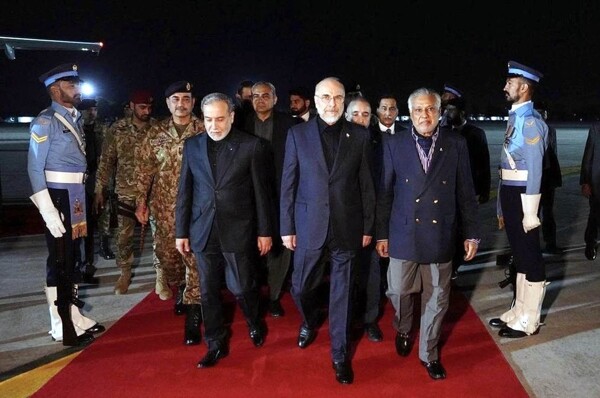
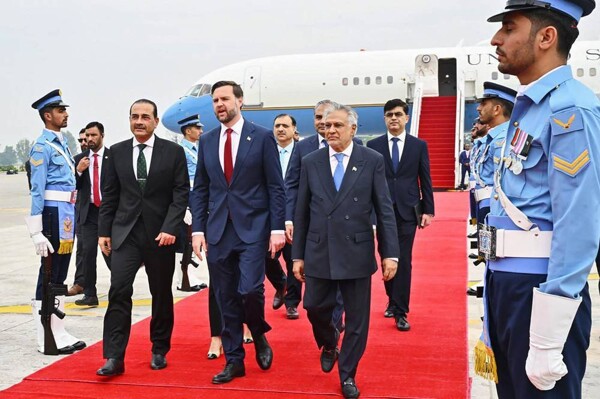
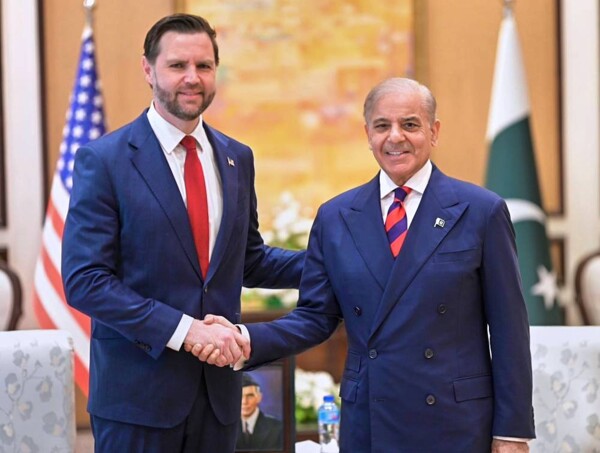
The previous night's meeting between the Iranian delegation and the head of the Pakistani Army, General Asim Munir, also showed that Islamabad seeks to involve not only its civilian diplomacy but also its strategic apparatus in a crisis that directly impacts regional security and global energy trade. For Vance, the mission also has a special political weight. The problem is that on the other side, the Iranian regime arrives convinced that it still holds a decisive card: the ability to continue conditioning transit through the Strait of Hormuz, a vital corridor for the world's oil and gas. Although the climate in Islamabad was that of a high-voltage meeting, the initial signals remain cautious: there were separate meetings, heavy security, and much caution about whether there will be a real political breakthrough or merely a containment photo. The fact that caused the most noise beforehand was the version that emerged from Iranian sources, according to which Washington would have agreed to unfreeze Iranian assets in foreign banks as part of an understanding for the Islamic Revolutionary Guard Corps to loosen control over the Strait of Hormuz. Sharif's management did not appear out of nowhere: in recent days, Pakistani officials had already been acting as a channel for messages between both parties to prevent the conflict from escalating further. For now, the central political fact is that the conversation started, but it started with denials, distrust, and the Strait of Hormuz still being used as a lever by Tehran. If the negotiation prospers, Pakistan can score a high-impact diplomatic victory. The Iranian regime is trying to make the unfreezing of assets and the Lebanon-Hezbollah file preconditions for moving forward, while the United States seeks to prevent this table from becoming a validation of Iran's regional pressure strategy. Even though markets started to discount a possible de-escalation and crude oil eased from recent peaks, the energy front remains extremely sensitive because navigation has not yet returned to normal and the conflict with Hezbollah in Lebanon continues to taint any attempt at a definitive closure. A senior U.S. official stated that that version was false and emphasized that the proper negotiation meetings had not even begun yet. This point is not minor, because the unblocking of those funds, along with the end of the Israeli offensive against Hezbollah in Lebanon, are part of the conditions that Tehran has been pushing to sit down and discuss a more durable cessation of hostilities. In that context, Pakistan is trying to play a role that will reposition it in the region as a useful mediator between two actors that have no trust in each other. If it fails, it will be exposed that Islamabad barely served as a stage for a showdown in which no one wanted to yield first. In other words, the Islamabad table is not discussing just a military truce: it is also discussing whether the risk of a prolonged shock to oil, inflation, and supplies can be reduced. That is why behind the diplomatic formality there is a much rougher fight. Prime Minister Shehbaz Sharif first received the Iranian delegation headed by Mohammad Baqer Qalibaf and shortly after the U.S. Vice President, JD Vance, in a sequence that marked the formal start of the new round of contacts to try to sustain a very fragile truce after the war unleashed in recent weeks around the Islamic regime of Iran. This reading arises from the combination between Iranian demands and the U.S. denial of any prior concession. The dimension of the moment is also explained by another reason: it is the highest-level contact between delegations of the United States and Iran since the 1979 Iranian revolution, in the middle of a war that left thousands dead, altered energy flows, and put the world back obsessively watching the Strait of Hormuz. That is precisely the logic that makes the Islamabad showdown so delicate: Tehran wants to discuss from a position of potential damage, while Washington wants to show that it will not accept negotiating under strategic blackmail. Pakistan's capital became this Saturday the main diplomatic board of a crisis that has not yet eased. The American vice president arrived in Pakistan with a hard line and a prior warning message for Iran, making it clear that the United States does not want dilatory maneuvers or a negotiation mounted on extortionary pressures. But the White House came out to deny it bluntly.