The region of Balochistan is most often described in modern Pakistani history as perilous and fraught with political conflict, and it is lagging in development. Its immense mineral wealth, long pointed to by geological studies and political discussions, has yet to be harnessed as sustainable and effective international investment. This has resulted in a persistent gap between promises and reality, which has cemented the global view of the region as a risky border area rather than a destination for long-term economic investment.
However, this picture is beginning to change. New waves of Chinese and Pakistani investment, focused on the long-awaited Reko Diq project, suggest that major investors are reassessing the scale of mineral wealth buried in Balochistan and the strategic logic of continued investment despite instability and threats from armed groups.
Strong forecasts for mineral exports worth $5 billion over the next decade do not hide the structural challenges facing the region, but they point to a growing confidence that Pakistan's enhanced security measures, infrastructure planning, and international partnerships are now in a better position to support long-term resource development.
In this context, the Reko Diq project transcends being merely a mining venture; it becomes a test of whether economic potential and geopolitical necessity can change long-standing perceptions of security risks.
The Investment Reality
Balochistan has long been portrayed as turbulent, but large-scale mining investment reveals a more complex story. Chinese companies and major Pakistani business groups have secured new concessions for copper, gold, and associated minerals, expanding the scope of involvement to include other projects besides the Canadian-owned Barrick Mining's Reko Diq project, hinting at the formation of a wider mining corridor rather than a single, isolated project.
In fact, logistical planning is already underway. The Pakistan International Bulk Terminal at Port Qasim has been contracted to handle mineral exports exceeding $5 billion in phases, while the Reko Diq project alone is expected to yield around $2.7 billion annually in its initial phase. Production could reach between 800,000 to one million tons of metals per year once production begins between 2028 and 2029. For an economy suffering from weak exports and recurring balance of payments crises, a project of this magnitude will have positive effects that extend beyond the mining sector to encompass the national economy's overall health.
The ownership structure reflects a deliberate political and financial balance, with Barrick holding 50% of the project, while the remaining share is split between Pakistan's federal government and the government of Balochistan, combining foreign capital, sovereign participation, and risk-sharing.
The planned expenditure of around $150 million on specialized port infrastructure, within a broader development framework of $7.7 billion, indicates a long-term commitment spanning decades, not just speculative investment income. Capital of this magnitude rarely flows into environments that investors deem unsustainable, and the growing network of concessions, logistics services, and infrastructure points to the market's confidence in Pakistan's long-term stability.
The Reko Diq project emerges as a geopolitical arena, and the announced U.S. financial support of $1.3 billion, tied to critical mineral supply chains, indicates Washington's interest in securing the copper and gold essential for electricity, renewable energy, and defense industries.
Concurrently, investment and regional partnerships linked to China are deepening, and the convergence of competing interests reflects patterns similar to those seen in the cobalt markets of the Congo, copper in Zambia, and lithium in Chile, where strategic minerals attract fierce global competition.
This mineral momentum is set within a much broader economic framework between China and Pakistan. Under the China-Pakistan Economic Corridor, a flagship project of the Belt and Road Initiative, China has committed to investments exceeding $62 billion in energy, transport, and industrial infrastructure sectors.
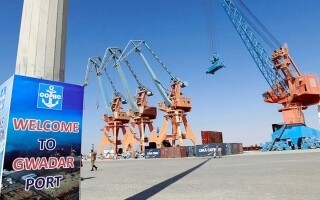
The development of Gwadar Port on the Arabian Sea is a cornerstone of this strategy, as it provides China with shorter trade routes to the Middle East, while cementing Pakistan's position as a regional logistics hub. The current bilateral trade volume stands between $25 and $27 billion annually, with China being Pakistan's largest trading partner and one of its most significant long-term investors.
Security Risks
Yet, security threats remain as volatile as ever. As Pakistan seeks to attract global financing for its mining sector, the pivotal question for investors is whether these risks can be reasonably contained. Experiences from mining areas with political instability in Africa and Latin America show that high-value ore deposits can sustain production when supported by multi-tiered security, logistical flexibility, and strong financial incentives.
Pakistan appears to be cautiously moving in this direction through dedicated security forces, expanding intelligence coordination, and deepening security cooperation with key partners, especially China.
However, security alone does not guarantee sustainability. There must be a fair distribution of resources, and the region's inhabitants must feel they are benefiting from these investments. Without effective local integration, job creation, revenue sharing, infrastructure development, and institutional trust-building, the risks of large-scale mining exacerbate grievances. While mining has contributed to stabilizing previously fragile areas, it has done so only when surrounding communities saw tangible benefits rather than deprivation and marginalization.
Regardless of overall economic forecasts, expectations within Balochistan itself are closely tied to whether large-scale mining will translate into tangible local benefit. Local officials and community representatives consistently point to jobs, revenue shares, roads, water, education, and healthcare as the ultimate criteria by which projects like Reko Diq will be judged.
A Strategic Test
Pakistani leadership believes the global acceleration in the minerals sector represents both an opportunity and a strategic test. Successful exports could attract capital for ongoing exploration and more deeply integrate the country into global supply chains linking Central Asia, the Gulf, and the Indo-Pacific region. Failure, however, could deepen investor doubts not only about Balochistan but about Pakistan as a whole. It is becoming clear that Balochistan's future will no longer be determined solely within Pakistan's borders, and as global competition for vital minerals intensifies, external powers are focusing on the region's copper and gold.
The critical question remains not whether these resources will be exploited, but who will set the terms for mining operations and whether local communities will share in their wealth?
Capital is, for now, continuing to flow despite instability, and this persistence alone signals a shift in perspective. Balochistan is no longer viewed merely as an unstable border region but as a strategically significant arena whose growing importance cannot be ignored.